
Last updated November 23, 2026
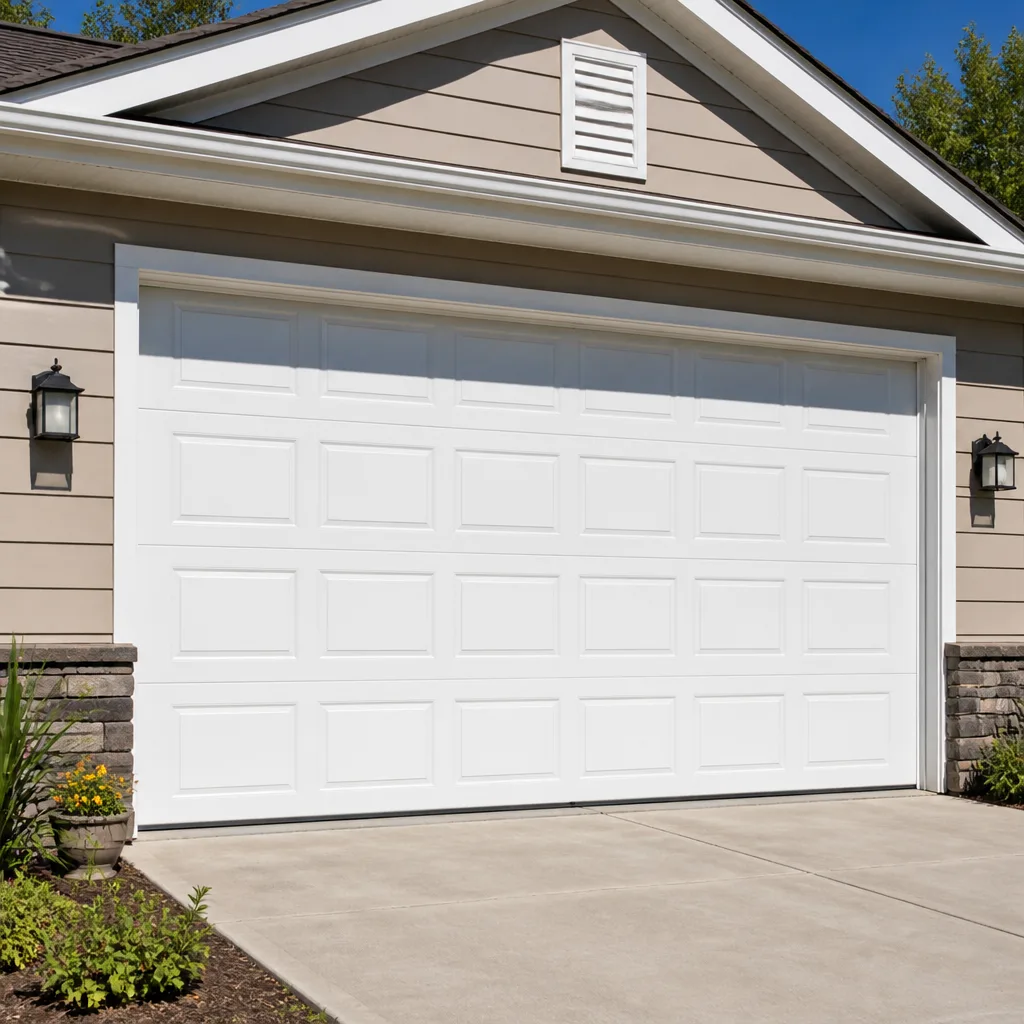 Raised-panel steel
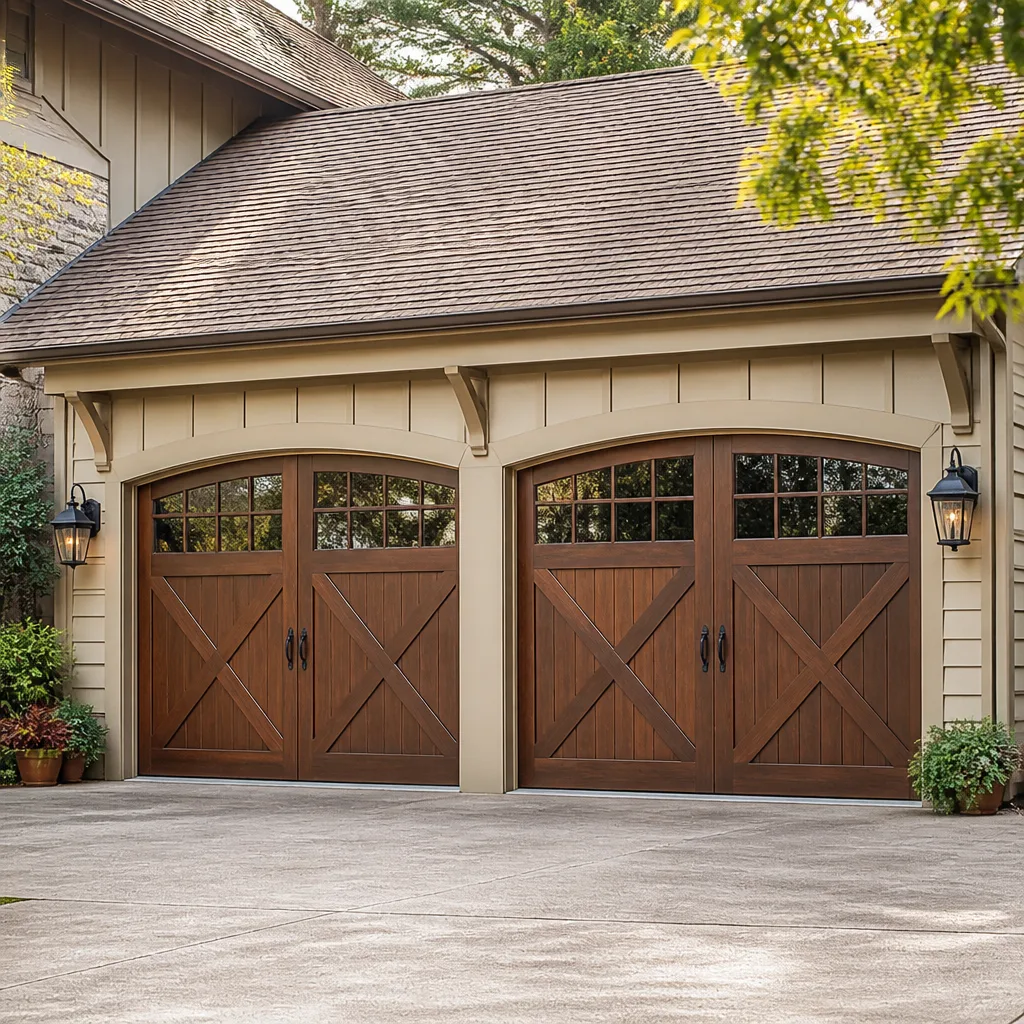 Carriage house
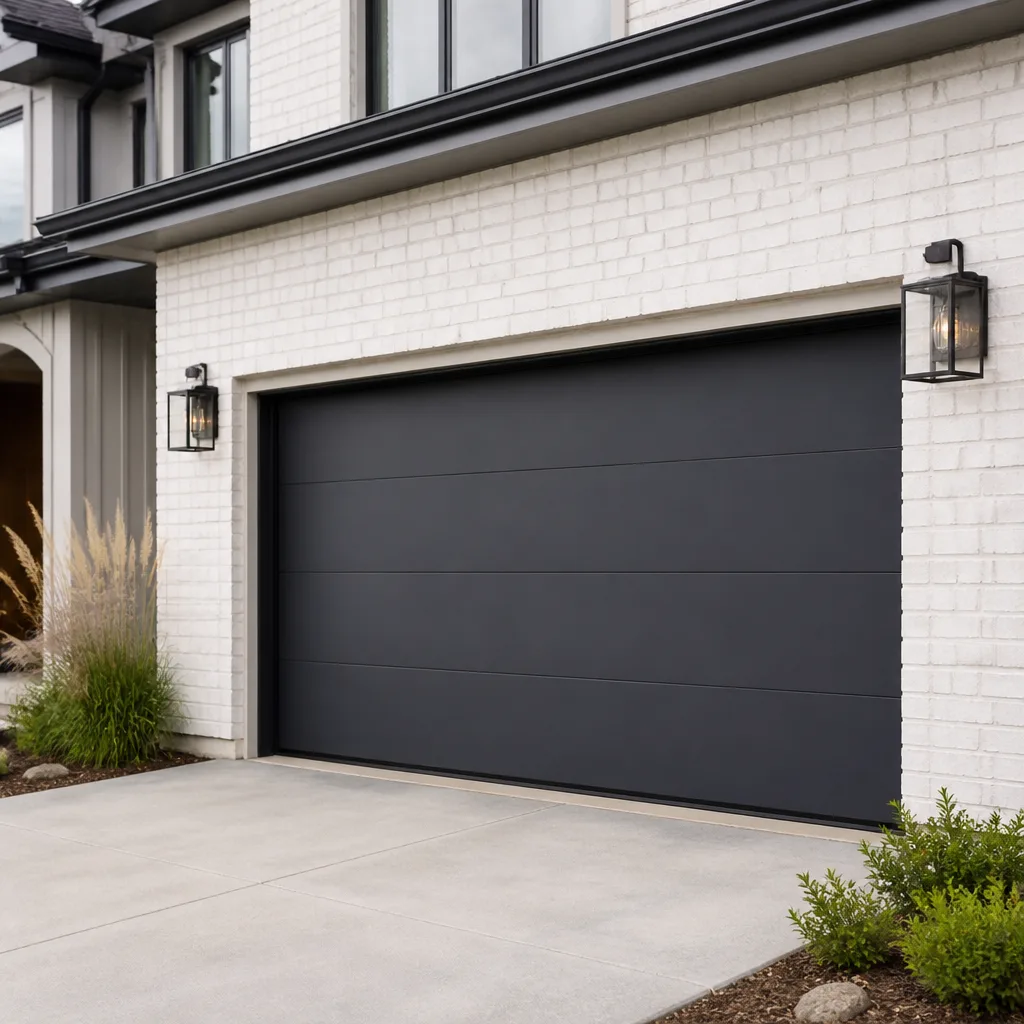 Modern flush
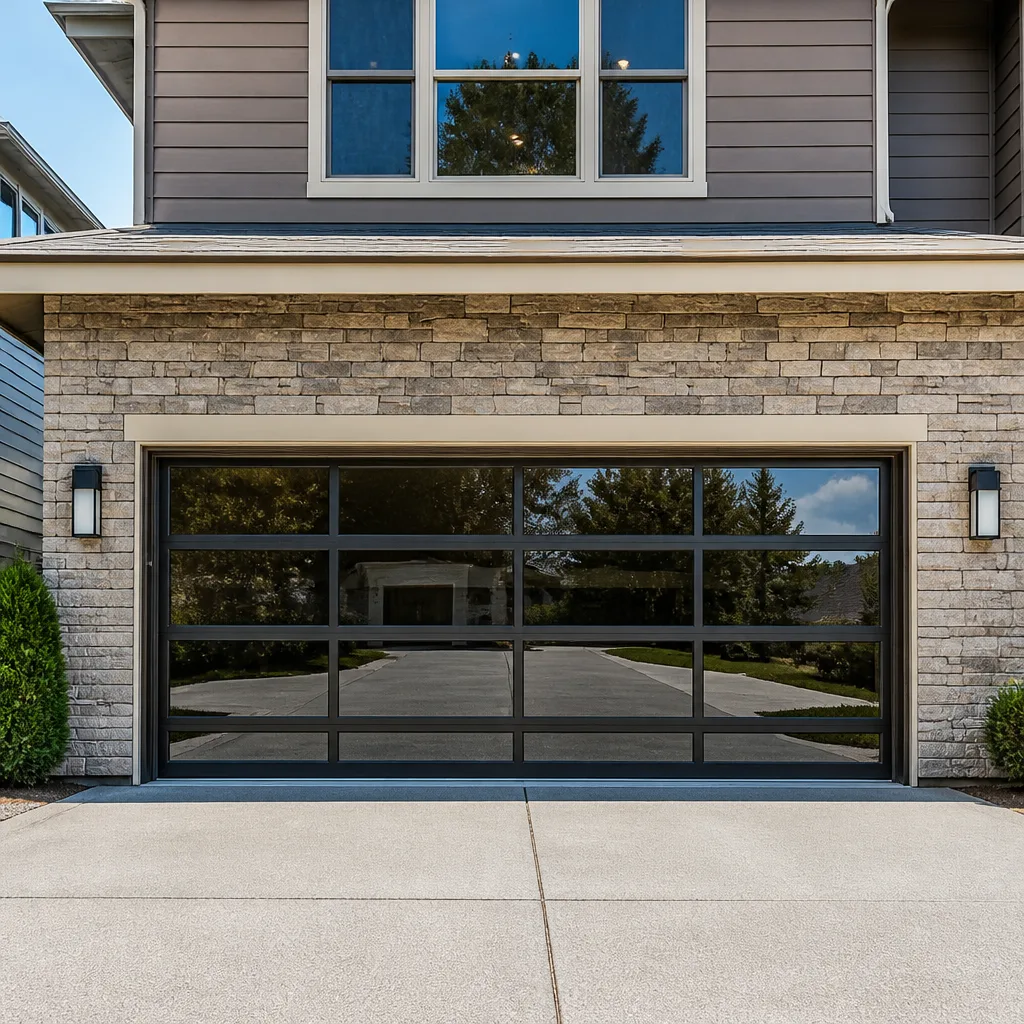 Full-view glass
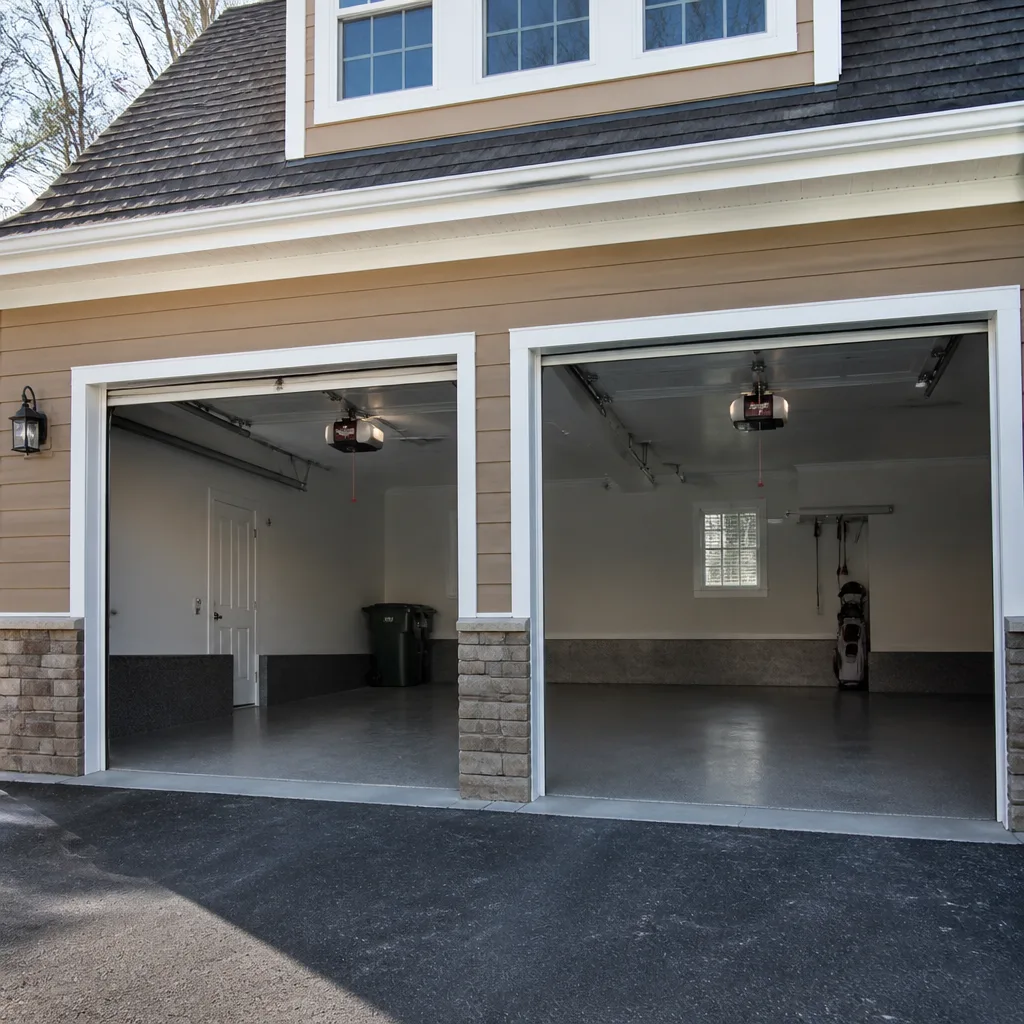 LiftMaster openers
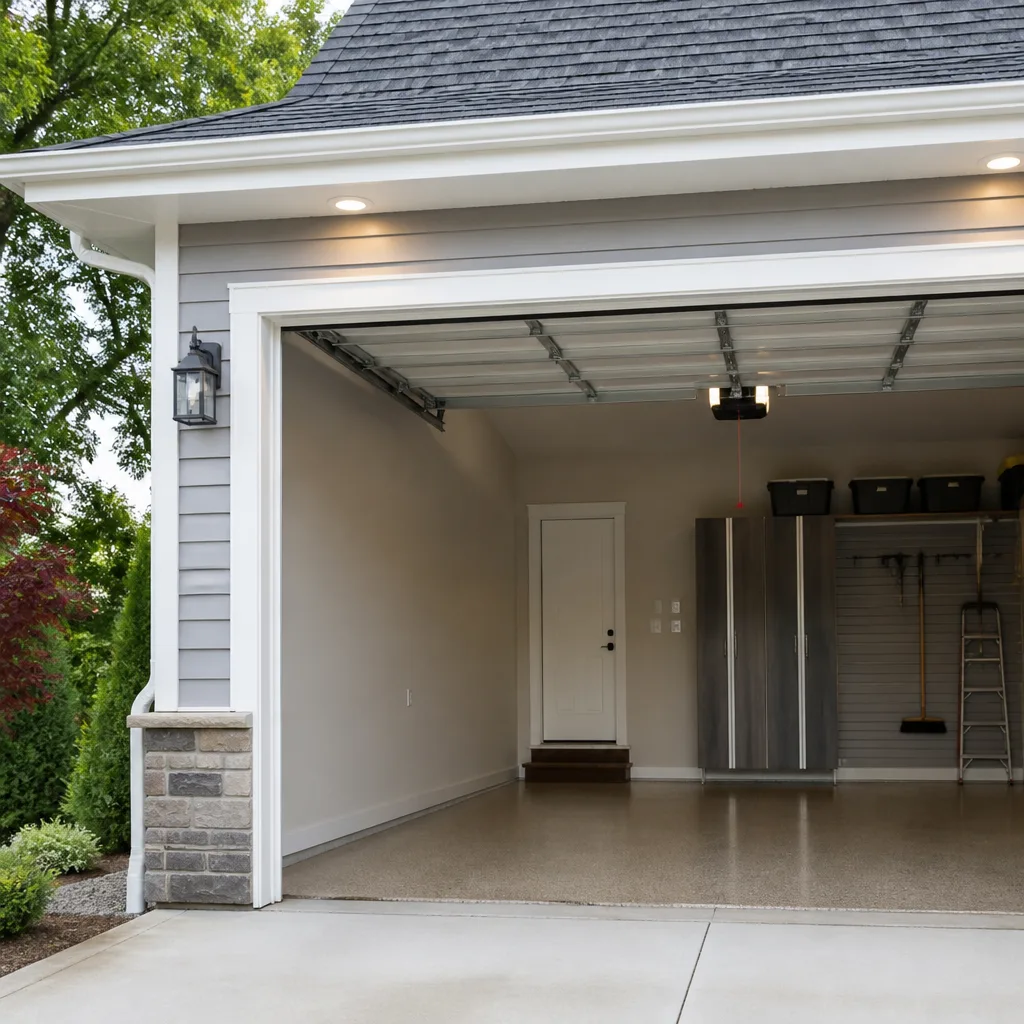 Chamberlain openers
Full 25-point door and opener safety check with every visit - springs, cables, rollers, tracks, and your LiftMaster or Chamberlain opener included
You get a price before we start. It does not change when the pro arrives.
Get your free estimateDIY vs Professional Garage Door: The Wallingford Homeowner’s Decision Guide
Most homeowners assume the DIY-or-pro decision comes down to confidence. It doesn’t. A torsion spring under load stores enough energy to break a wrist or worse, and it releases that energy whether you’re careful or not. The physics of a failed spring don’t care how handy you are. That’s why the real line between “safe to do yourself” and “call someone” is drawn by the mechanism, not by skill. In this guide, we draw that line precisely for Wallingford homeowners – task by task, with the mechanical reason behind each call, the tools you’d actually need, and what the honest cost comparison looks like. You’ll finish knowing exactly what’s yours to handle and what isn’t.
Quick Answer
A mechanically competent homeowner can safely handle lubrication, visual inspections, panel cleaning, track wiping, balancing tests, and replacing opener batteries or remotes. Anything that involves torsion springs, extension springs, cables, or the opener’s high-voltage internals is a professional job – not because it’s too hard, but because a sudden failure during the work can cause serious injury. If the task puts your hands inside a loaded spring system, stop and call.
Styles & brands we work with
- Raised-panel steel
- Carriage house
- Modern flush
- Full-view glass
- LiftMaster openers
- Chamberlain openers
Table of Contents
- Why the DIY-versus-professional line exists at all
- What a homeowner can safely do themselves
- What requires a trained technician, and why
- The tools each DIY-safe task actually requires
- Insurance and liability: what changes after a DIY repair
- Honest cost comparison for the five most common repairs
- Partial DIY: prep and teardown that reduce a billable
- Wallingford-specific factors
Why the DIY-versus-professional line exists at all
Garage door systems are counterbalanced. A door that weighs a couple hundred pounds feels light because springs store the energy to lift it. That stored energy is the whole point of the design – and the whole problem. When a torsion spring is wound, the steel is under continuous tension even when the door isn’t moving. The most dangerous moment in any spring or cable job is the same moment: when something releases unexpectedly.
This is why “I’m pretty handy” doesn’t translate here the way it does to plumbing or painting. In most home repair, a mistake leaks or looks bad. In garage door spring and cable work, a mistake can fail into a person standing twelve inches away. A technician isn’t braver than you; the technician has the winding bars, the door clamps, and the protocol that keeps the spring captured while it’s being worked. Those tools exist for a reason, and the reason is physical.
The rest of the door is different. Tracks, rollers, hinges, panels, weather seals, opener settings, remotes, sensors: these can be inspected, cleaned, adjusted, or replaced by a homeowner who’s comfortable with basic tools. The line isn’t “professional or nothing.” It’s specific. Below we walk it task by task, and if you’d rather skip ahead to the deepest technical work, our garage door spring repair page covers the spring side in full.
One more thing before the lists: the line moves slightly depending on what’s installed. A Wayne Dalton door with a TorqueMaster spring inside the torsion tube, a Clopay door with a standard torsion bar, an older Craftsman opener chain-drive – the exact disassembly for maintenance differs, which is why brand familiarity matters. We service all eight of the most widely owned residential brands, including Clopay, Amarr, Wayne Dalton, and Craftsman, so the advice below holds whether your door is a builder-grade steel panel or a newer insulated model.
What a homeowner can safely do themselves
These tasks are genuinely within reach for a homeowner with a step ladder, a few hand tools, and reasonable care. None of them require releasing spring tension.
- Lubricate the moving parts. Rollers, hinges, the torsion bar bearings, and the opener rail benefit from a garage door lubricant a couple of times a year. Wipe the old grease off first so you’re not trapping grit. Use a dedicated door lubricant, not WD-40, which is a solvent and leaves the parts dryer than they started.
- Do a visual inspection. Look for frayed cables at the drums, worn rollers, bent hinges, loose bolts, and a torsion spring with a clean gap in it (that gap means it has broken). Inspect the door panels for dents or split seams. This is a ten-minute walkaround anyone can do.
- Clean and wipe the tracks. A damp cloth along the inside of the vertical and horizontal tracks removes dust and old grease buildup. Use a mild soap solution and dry thoroughly. Never lubricate the tracks – the rollers are designed to roll, not slide.
- Test the opener’s safety reversal. Place a roll of paper towels or a 2×4 flat in the door’s path and close it. The door should reverse on contact. Most openers have a force and travel adjustment you can verify per the manual. If it doesn’t reverse, stop using the door and have it checked.
- Replace opener batteries and remotes. Remote batteries, keypad batteries, and re-pairing a remote to a LiftMaster, Chamberlain, Genie, or Craftsman head unit are all safe homeowner tasks. The manual has the pairing steps.
- Do a balance test. Disconnect the opener (pull the release cord when the door is closed) and lift the door halfway by hand. A balanced door should stay there. If it drops or rises on its own, the springs need attention – and at that point you stop and call.
Every one of these is also a maintenance habit, not a repair. If the balance test tells you the springs are out of adjustment, that’s the moment the DIY window closes.
What requires a trained technician, and why
These are the tasks where the mechanism itself is the risk. The reason listed for each is mechanical, not a matter of difficulty.
- Torsion spring replacement or adjustment. The spring stores the door’s weight as rotational tension. Winding or unwinding it requires two properly sized winding bars and the door pinned. A winding bar that slips out – or a bar the wrong size – is one of the most common serious injury points in this trade. There’s no safe improvisation.
- Extension spring replacement. Older doors use extension springs above the horizontal tracks. They still hold stored energy, and if one snaps, the fail-safe cable is the only thing keeping the spring from flying. Inspecting and replacing them, and confirming the safety cable is intact, is technician work.
- Cable replacement. The lift cables are under tension and spool on the drum. A loose or snapped cable can whip with enough force to cut. Setting the cable correctly on the drum is a precise job.
- Bottom bracket and drum work. The bottom bracket holds the cable under tension. Anything attached to a cable under load is off-limits to DIY.
- Opener electrical and logic board work. The opener’s transformer and capacitor hold a charge after the breaker is off. Capacitor discharge is a real hazard. Sensor, travel, and force adjustments are usually safe per the manual, but internal component work is not.
- Panel replacement on a tensioned door. A dented panel on a door still under spring tension means working around a loaded system to remove and refit. That’s a technician job.
- Track alignment after a hard strike. A door that’s jumped its track is under uneven load and can fall. Re-seating it in the track safely requires the door to be stabilized first.
This is the specialized work our garage door repair handles directly, and it’s where we spend most of our hours. Spring failure is one of the most common and most dangerous garage door problems, and we treat it that way. If your door is stuck open, stuck closed, or won’t reverse, our Garage Door Repair Wallingford emergency line is built for exactly that call.
The tools each DIY-safe task actually requires
Improvising tools is the second-most common way homeowners get hurt on garage doors – usually not with the spring itself, but with what they reach for when a stuck or stiff part doesn’t cooperate.
- Lubrication: a dedicated garage door lubricant, a rag, and a step ladder of the right height for the horizontal tracks. Improvising with a spray can of general-purpose oil means you’ll attract dust and gum up the rollers.
- Track cleaning: a damp cloth, mild soap, and a dry rag. Improvising with a power washer drives water into the bearings. Improvising with a metal scraper can gouge the track.
- Balance test: nothing but your hands and the release cord. Do it with the door closed and pulled free of the opener only. Improvising by testing with the opener still engaged tells you nothing about the springs.
- Opener adjustment and sensor alignment: a screwdriver that fits the adjustment screws and the manual for your brand. Improvising with a screwdriver that’s too small strips the adjustment screws, which are soft brass on many units.
- Remote or keypad pairing: the opener’s manual and fresh batteries. Improvising by guessing the pairing code can lock the head unit until you do a full reset.
Notice what’s absent: winding bars, cable grips, door clamps, a winding bar holder. Those are the tools of the trade for spring and cable work, and there’s no safe substitute. A bar that isn’t sized for your spring can slip. A door that isn’t pinned can drop. This is why our spring work isn’t priced as a quick task – the tools and the protocol are the job.
Insurance and liability: what changes after a DIY repair
Here’s the part most guides skip. If a DIY repair later causes property damage or injury, your homeowners policy doesn’t automatically step in. Policies typically cover sudden and accidental damage; work you did yourself that was done incorrectly and later fails may be treated differently, and the specifics live in your policy language, not in a general rule. Some insurers ask specifically whether any work on the door was self-performed when a claim involves the door.
For Wallingford homeowners, the practical steps are these:
- Check your policy language before you start. Ask your agent how a self-performed repair on the garage door system is treated if it later causes damage. Get the answer in writing.
- Keep records if you do the safe tasks yourself. Note what you did, when, and with what product. If a door later fails, documented maintenance supports the picture that you were maintaining, not modifying.
- Never touch the spring, cable, or opener internals. This is the part where a policy question moves from “who pays” to “is anyone hurt,” and the second is the one that matters.
- When you hire out, confirm the local pro is licensed and insured as their state requires. Ask before they start. A written estimate and a documented job protect everyone.
We don’t want to overstate the insurance angle – most of the time it doesn’t come up. But when it does, it’s usually after a spring job, which is exactly the work we tell you not to do yourself. Our technicians have up to 12 years of experience, and the estimate is free and the price is set per job in writing before any work starts.
Honest cost comparison for the five most common repairs
Cost is where DIY looks cheapest – and sometimes is. But it’s only cheaper if you’re comparing parts plus your time against the full professional price, and only if the DIY repair actually holds. Here’s how the five most common repairs break down for a Wallingford homeowner.
- Torsion spring, one spring: A replacement spring is a modest parts cost, but the winding bars and door clamps you’d need to do it safely cost more than the spring itself, and the injury risk isn’t comparable. This is a professional job, full stop. A matched pair is usually replaced together and costs roughly twice a single spring. Call for an exact price.
- Extension spring pair: Similar to torsion – the parts are inexpensive, the tools and safety protocol are not. Fail-safe cables must be checked at the same time. Professional job.
- Roller replacement: A set of nylon rollers is cheap and the job is within a careful homeowner’s reach – but only if the door is fully down and disconnected, and only if you’re comfortable working above head height on a ladder. If the door is under heavy spring tension or shows any sign of imbalance, stop.
- Weather seal or bottom seal replacement: Among the most DIY-friendly repairs. The materials are inexpensive, the work is at floor level, and the risk is low. The trick is getting the right profile for your door – a Clopay seal is not the same profile as a Wayne Dalton one.
- Opener logic board or motor: Not a homeowner job. The capacitor holds a charge after power-down, and a mis-wired board can burn out the head unit. Our garage door opener repair covers the electronics side.
One honest note on the DIY math: the “savings” on spring and cable work usually disappears the moment you buy the tools, and it ignores the downside if a bar slips. On weather seals and rollers, DIY genuinely saves money. Draw the line there.
Partial DIY: prep and teardown that reduce a billable
You don’t have to choose between fully DIY and fully hands-off. There’s a middle path where you do the safe prep and the technician does the technical work – and it can shorten the job.
- Clear the floor and the approach. Remove cars, bikes, and anything stacked under the door and along the tracks. A cleared work area means the technician gets to the spring faster.
- Test and document. Note whether the door is stuck open, stuck closed, or won’t reverse, and whether the opener responds to the wall button or the remote only. Specific symptoms save diagnostic time. Brand and model – if you can read it off the head unit, note it down.
- Disconnect the opener before you call (only if the door is safe to leave). Pull the release cord with the door fully closed so the door isn’t fighting a dead opener. Never release the cord on a door with a broken spring or a door that’s already out of balance – the door can drop.
- Bag and label removed parts. If you’ve started a roller or seal replacement and stopped, keep the parts in a labeled bag. The technician can confirm what’s already been done.
- Get the paperwork ready. Have your estimate, any prior service record, and the door or opener manual nearby.
What partial DIY should never include: unwinding or winding a spring “to help,” removing a cable, or opening the opener case. Those aren’t prep; they’re the job. And on any task where the door is stuck open and exposed – a security exposure in Wallingford especially – our emergency service is the call, not a prep step.
Wallingford-specific factors
Garage doors in Wallingford live in a climate that’s hard on the hardware. Freeze-thaw cycling through the winter flexes the door and the seals; the local housing stock includes a lot of older doors where the springs, cables, and rollers have been in service long enough that a visual inspection is worth more than a guess. If your door is more than a decade old and has never had the springs checked, the balance test above is the first thing to do.
Permits are the other local wrinkle. Most cities require a permit for structural work on a garage door system, and replacement of a full door sometimes falls under that rule. We don’t assume one way or the other – ask the Wallingford building department what applies to your job before you start anything beyond maintenance. Your written estimate should reflect what the permit process requires.
And the practical fact that ties DIY and emergency together: in Wallingford, a door that fails while open leaves your home exposed. That’s why we built a dedicated emergency service rather than treating emergencies as same-day scheduling. When your garage door won’t move, that’s exactly the call we’re built for. Call (888) 891-9574. We answer 24/7. Fast dispatch from 7am to 7pm, Sunday through Friday.
Common Mistakes to Avoid
- Attempting a torsion spring yourself because a video made it look manageable. The video compresses an hour of careful winding into four minutes. The physical risk is unchanged, and the winding bars are not optional.
- Lubricating the tracks. This is the single most common homeowner error. Rollers are designed to roll, not slide, and grease on the tracks causes them to skip and the door to catch.
- Using WD-40 as a door lubricant. It’s a solvent and it dries the moving parts out. Use a dedicated garage door lubricant.
- Pulling the release cord on a door with a broken spring. A door with a snapped spring has nothing holding it up. Pulling the release with the door open lets it drop.
- Replacing one spring of a matched pair. The pair is matched to the door’s weight. Replacing one leaves the door unbalanced and the second spring is usually close behind. Do the pair together.
- Ignoring a frayed cable because the door still works. A frayed cable is a cable about to fail, and a failing cable under load is where serious injuries happen. Inspect it during your walkaround.
- Assuming a permit doesn’t apply to a full door replacement. Ask the Wallingford building department. It’s a two-minute call and it settles the question.
See the difference
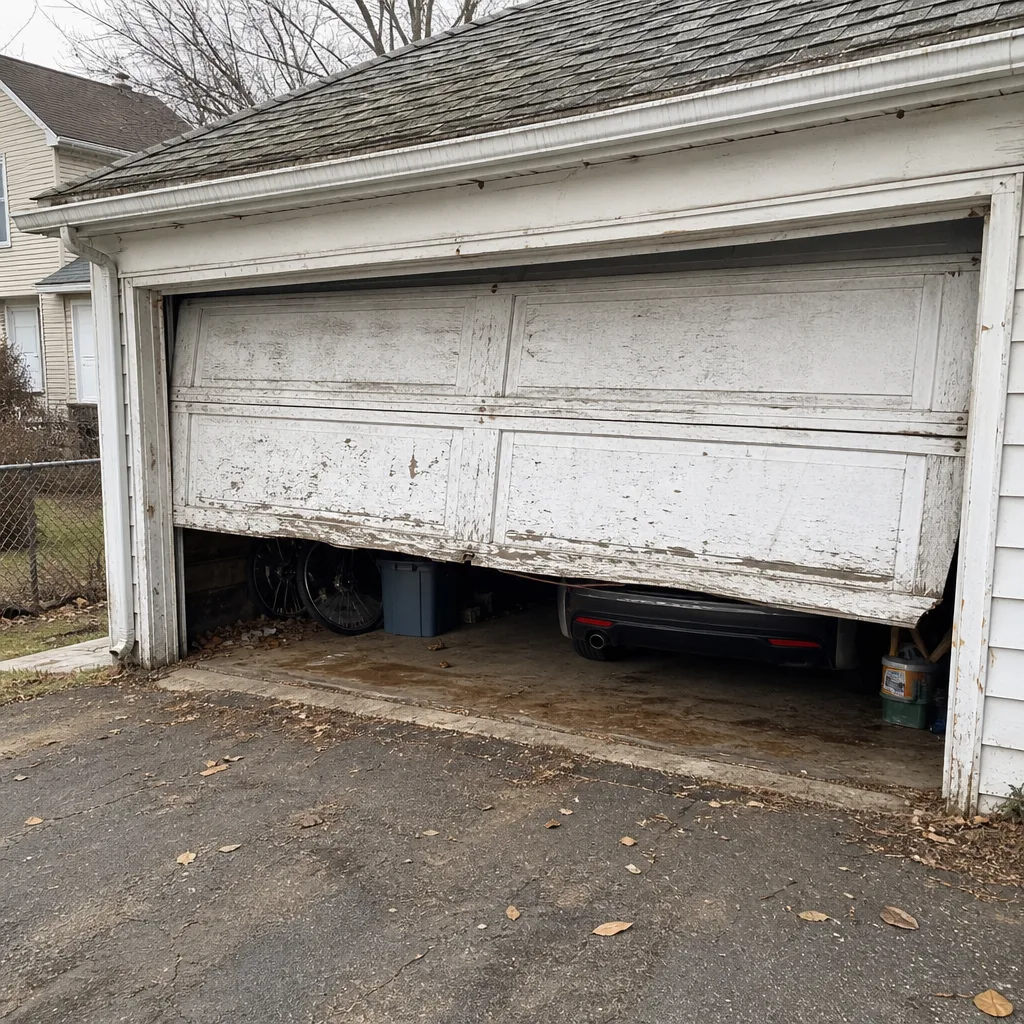 Before
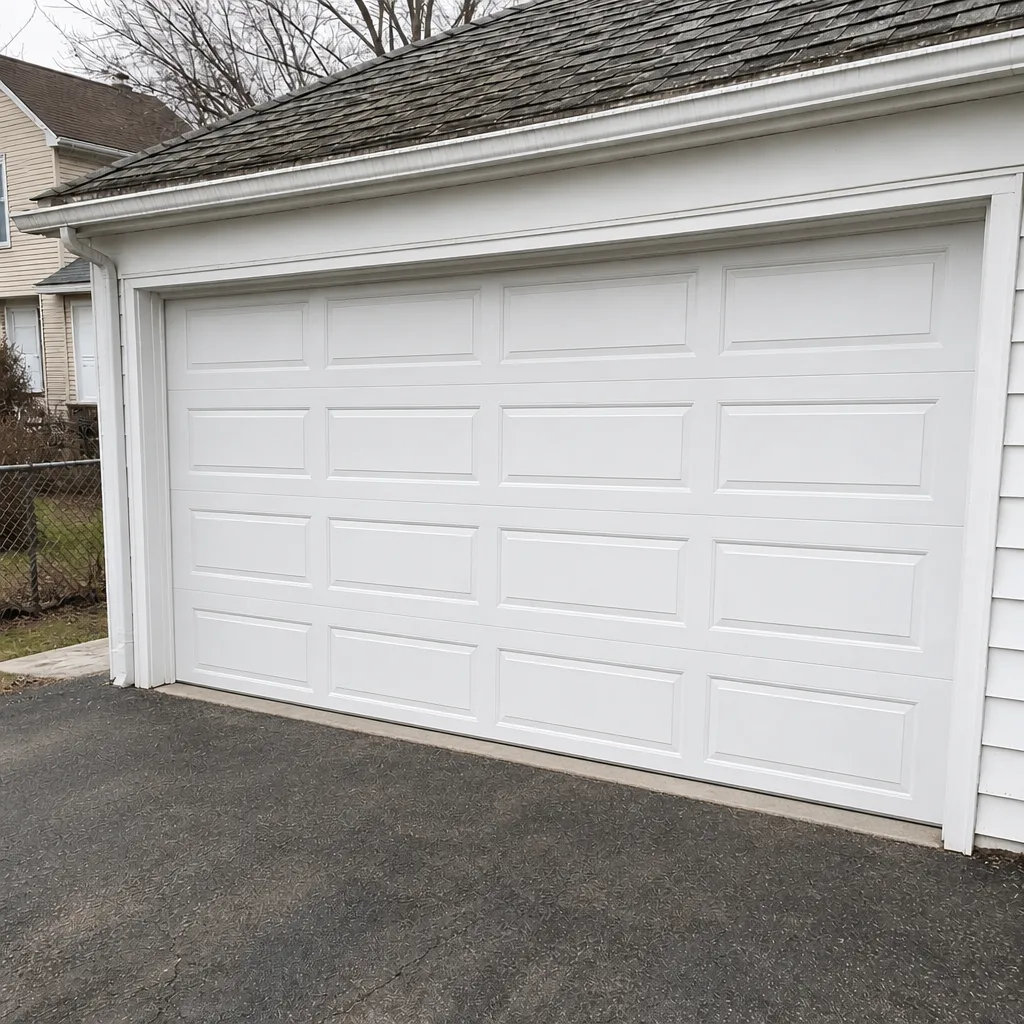 After
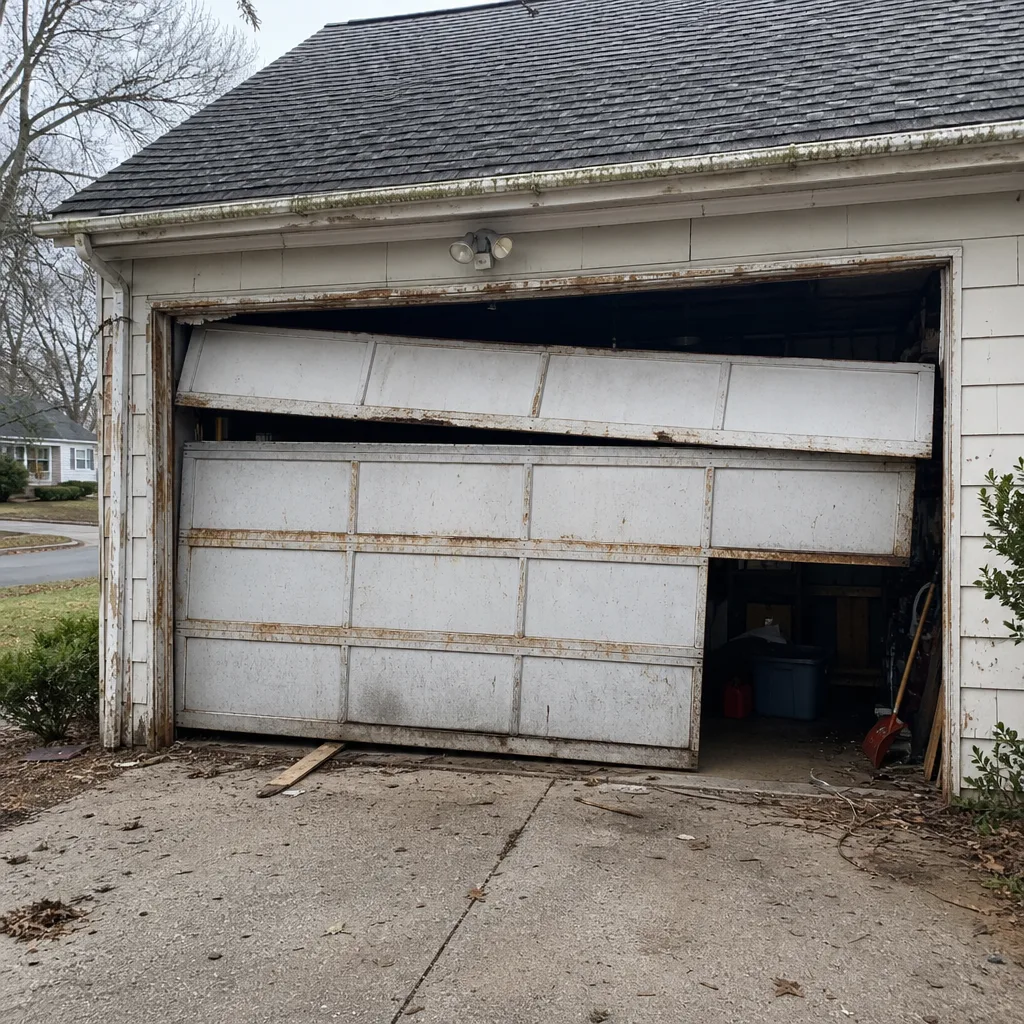 Before
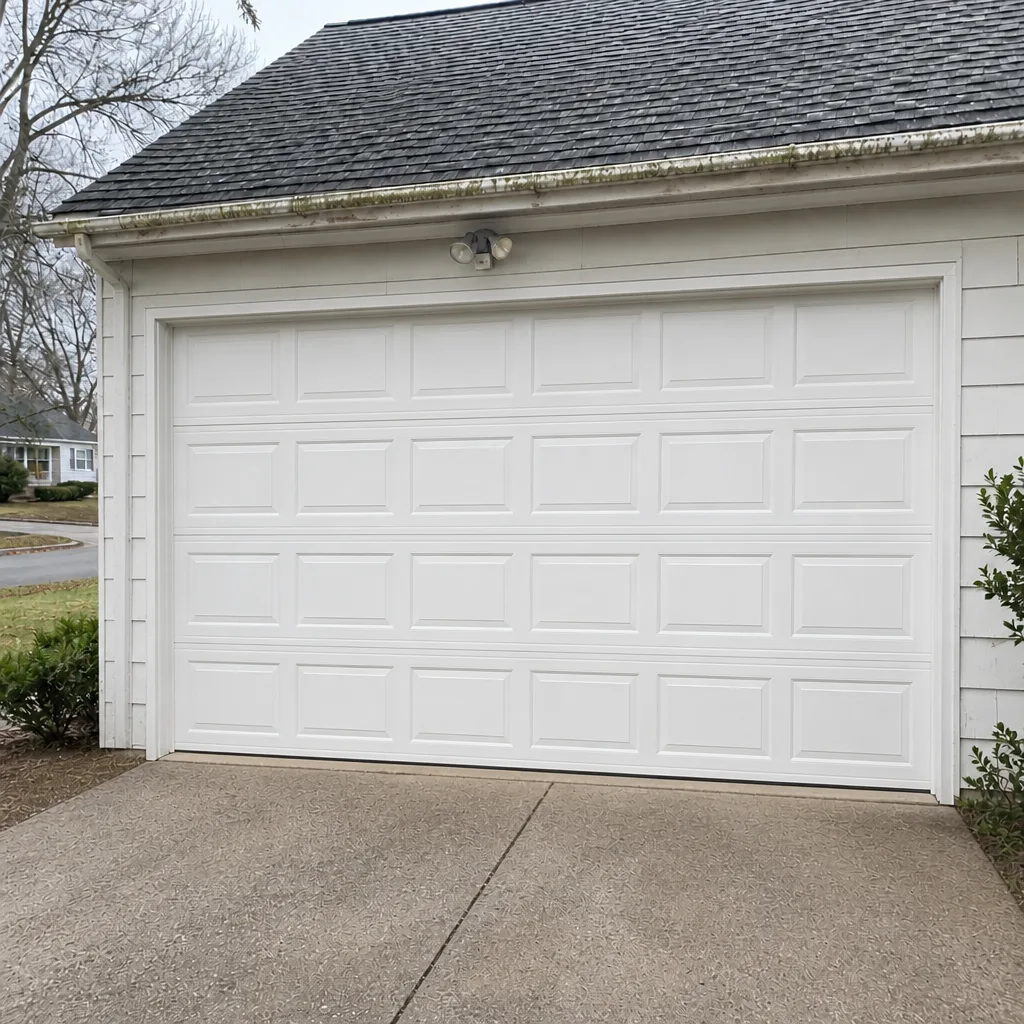 After
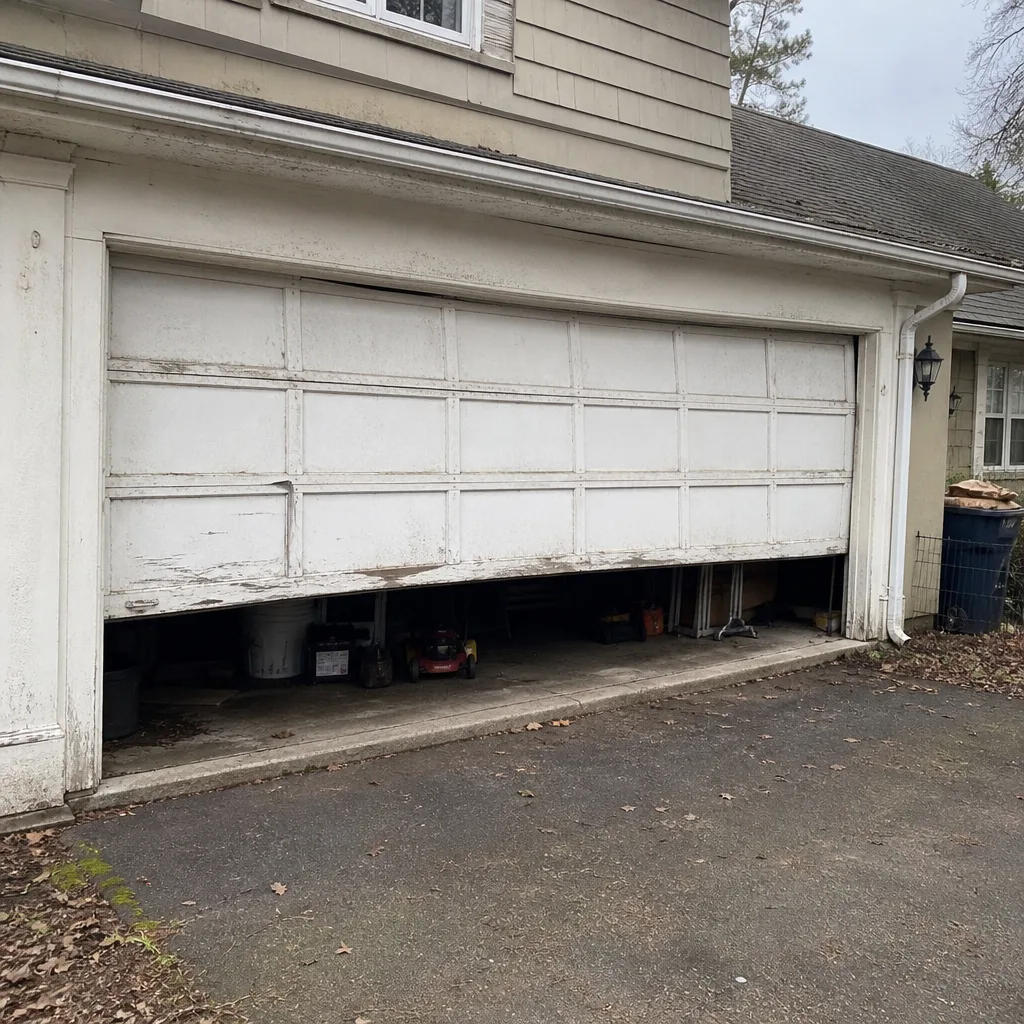 Before
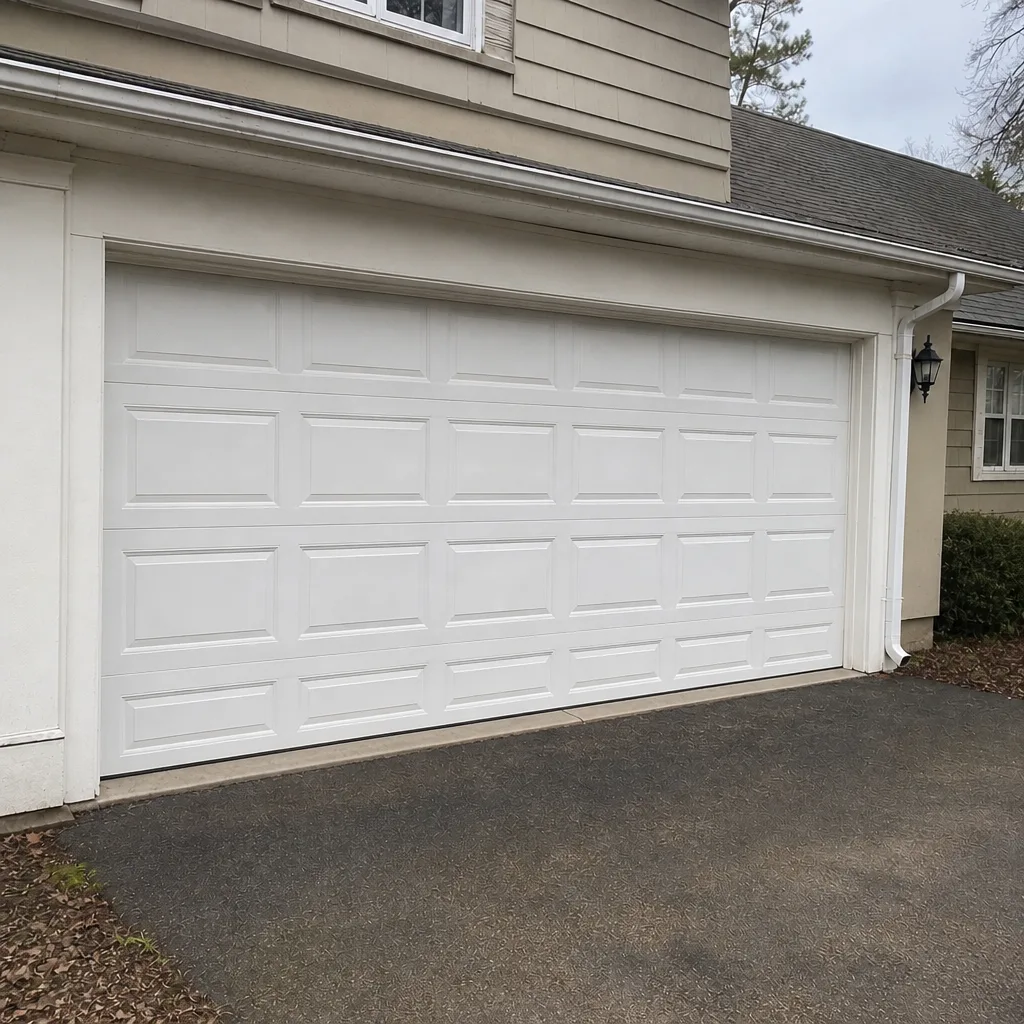 After
When to Call a Professional
Call a professional the moment the task touches a loaded spring or cable, the opener’s internals, or a door that’s off its track or out of balance. That’s the line. If you’re not sure which side of it you’re on, describe the symptom and ask – a free estimate answers it before any work starts. The price is quoted and agreed before we begin, so there’s no invoice surprise afterward.
The other scenarios worth a call: a door that won’t reverse on contact, a door that’s stuck open and exposed, a snapped spring, and a full replacement decision where you want to know whether the door can be repaired rather than replaced. We work on what you already have – no pressure to replace what can be fixed. Garage Door Repair Wallingford offers free estimates in Wallingford – call (888) 891-9574. We answer 24/7. Fast dispatch from 7am to 7pm, Sunday through Friday.
Frequently Asked Questions
No. Torsion and extension springs store the door’s weight as mechanical energy, and releasing that energy incorrectly can cause serious injury regardless of how careful you are. It’s not a matter of skill; it’s the physics of the system. Replacing a torsion spring requires winding bars, door clamps, and a protocol that keeps the spring captured. Call (888) 891-9574 for an exact quote on spring work – estimates are free.
Yes. Lubricating the rollers, hinges, and torsion bar bearings is one of the safest DIY tasks on a garage door. Use a dedicated garage door lubricant, not WD-40, and wipe the old grease off first. Never apply lubricant to the tracks themselves.
The line is the loaded spring system and the opener’s electrical internals. Lubrication, visual inspection, track wiping, balance tests, remote batteries, and sensor checks are homeowner-safe. Springs, cables, bottom brackets, drums, and opener boards are technician work. If a task puts your hands inside a loaded spring system, stop.
That depends on your specific policy. Policies typically cover sudden and accidental damage; a repair you performed that was done incorrectly and later failed may be treated differently. Ask your agent how a self-performed repair on the garage door system is treated before you start, and get the answer in writing.
Same-day repair is available. If your door is stuck open, stuck closed, or unable to close entirely, that’s exactly the emergency service we’re built for. Call (888) 891-9574. We answer 24/7. Fast dispatch from 7am to 7pm, Sunday through Friday. A call outside dispatch hours is booked into the next opening, Sunday through Friday, 7am to 7pm.
No. The written estimate sets the price, and it’s quoted and agreed before any work starts. If we find something that isn’t covered by the original estimate, we tell you before we touch it. Our technicians have up to 12 years of experience across the brands you’re likely to have, including Clopay, Amarr, Wayne Dalton, and Craftsman.
The Bottom Line
Draw the line by mechanism, not by confidence. Lubrication, inspection, track cleaning, balance tests, and remote work are yours to do safely. Springs, cables, drums, brackets, and opener internals are technician work, because the stored energy in the system doesn’t care how careful you are. The honest cost comparison supports that split: DIY genuinely saves money on seals and rollers, and the “savings” on spring and cable work disappears once you buy the tools – and ignores what happens if one slips. For anything on the professional side in Wallingford, one call covers it: repair, opener, spring, or full replacement. Call (888) 891-9574 for a free estimate. We answer 24/7. Fast dispatch from 7am to 7pm, Sunday through Friday.
Written by the team at Garage Door Repair Wallingford.