
Top Signs You Need Garage Door Service – Don’t Ignore These
Most garage door failures don’t happen without warning. They build up over days or weeks, and the clues are usually sounds, hesitations, and small visual changes homeowners write off as normal wear. The problem is knowing which signs mean “keep an eye on it” and which mean “call today.” If you’d rather not climb up there and diagnose it yourself, call (888) 891-9574 – we answer 24/7.
A door that takes two tries to close isn’t a quirk. It’s the safety sensor or the logic board telling you something’s off, and ignoring it usually means the next failure lands on a morning when you’re already running late.
Key Takeaways
- A hesitation before the door moves usually points to spring tension, not a weak opener.
- Grinding, squealing, and popping each come from different components and carry different urgency.
- A two-minute visual check of cables, springs, rollers, and tracks catches most failures early.
- Wallingford’s hard winters and humid summers speed up specific failures on a fairly predictable schedule.
- Learn to tell the signs you can monitor from the signs that mean call today.
What Should a Garage Door Sound Like – and What Do the Noises Mean?
Your door should make a low, even hum with a soft roll of the rollers. Anything new is a signal. The three sounds we hear about most each point to a different part, and they don’t all carry the same urgency.
- Grinding – Usually dry or worn rollers, a loose chain, or debris in the track. This one can often wait a short while, but it wears other parts faster the longer you let it run.
- Squealing – Metal-on-metal from rollers or hinges that have lost lubrication. Mild, but easy to fix before it costs you more.
- Popping or snapping – This is the serious one. A popping sound often means a spring is about to fail or a cable is slipping. Treat it as a call-today sign, not a monitor-it sign.
In Wallingford, we hear the most grinding complaints in the dead of winter, when cold thickens lubrication and metal contracts. A door that’s been quiet all fall can start grinding its way through January. That doesn’t mean the door is falling apart – it means it needs attention before the cold wears the rollers out for good.
Why Does My Garage Door Hesitate Before It Moves?
When the door pauses for a second before lifting, most homeowners assume the opener is getting old. That’s the wrong diagnosis more often than not. Hesitation almost always points to spring tension, and the difference matters because it changes how long you can safely wait.
The springs do the heavy lifting. The opener just starts and steers. When spring tension drops, the opener has to strain to get the door moving, so you get that pause or stutter at the start of every cycle. Left alone, that extra load wears the opener’s gears and can eventually burn out the motor – turning a spring repair into a spring and opener repair.
Hesitation also shows up in the door-closing logic on newer openers. If the safety sensor is blocked or misaligned, the door will often start, stop, and reverse before it commits. On brands like LiftMaster and Genie, a flashing light on the motor unit is your clue that the sensor is the culprit, not the door. Either way, hesitation is a real signal, and it’s worth a look before it turns into a door that won’t move at all.
The Two-Minute Visual Inspection Any Homeowner Can Do
You don’t need to dismantle anything. A quick visual pass once a month catches most problems while they’re still cheap to fix. Stand back and look at the door from the inside, then check four things in order.
- Cables – Look for fraying, kinks, or slack. A frayed cable is a call-today sign. Those cables are under high tension and can snap without warning, so don’t touch them yourself.
- Springs – Check for visible rust or a gap in a torsion spring. Rust and gaps point to a spring near the end of its life. Never try to adjust or replace a spring on your own – the tension in there can cause serious injury. This is exactly the kind of work a trained technician should handle.
- Rollers – Worn rollers look flat, cracked, or wobbly. Some noise here is normal; cracked rollers aren’t.
- Track alignment – The vertical tracks should be straight and parallel. A bend or a gap between the door and the track is a sign the door is off its path.
If everything looks straight and quiet, you’re in good shape. In Wallingford’s humidity, spring rust shows up faster than in dry climates, so a quick glance at those coils each month pays off. If something looks off and you’d rather have eyes on it, we can take a look – free estimates, and the price is quoted in writing before any work starts.
Which Signs Can You Monitor – and Which Mean Call Today?
This is the part homeowners worry about most, so let’s be clear about it. Not every noise is a panic. Some signs genuinely give you time; others don’t.
Signs you can monitor
- Squeaky rollers or hinges
- A mildly noisy door that still opens smoothly
- Slow wear on rollers you can see but haven’t replaced yet
- A remote that needs a fresh battery
Signs that mean call today
- Popping or snapping sounds from a spring
- A door that won’t close, or reverses on its own
- A visible gap in a spring, or rust you can see through
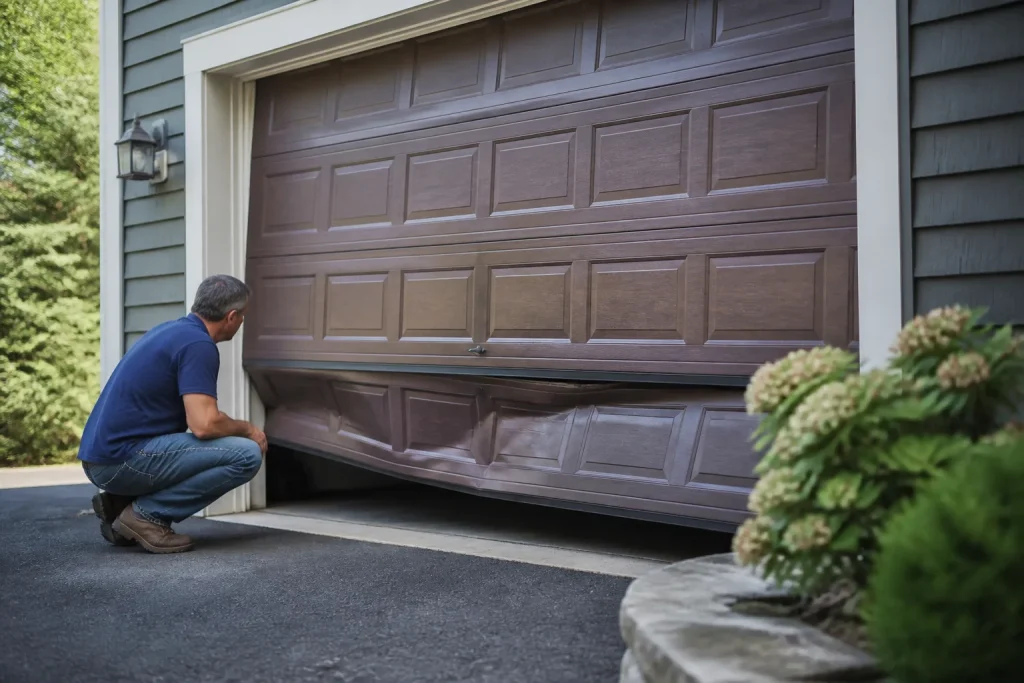
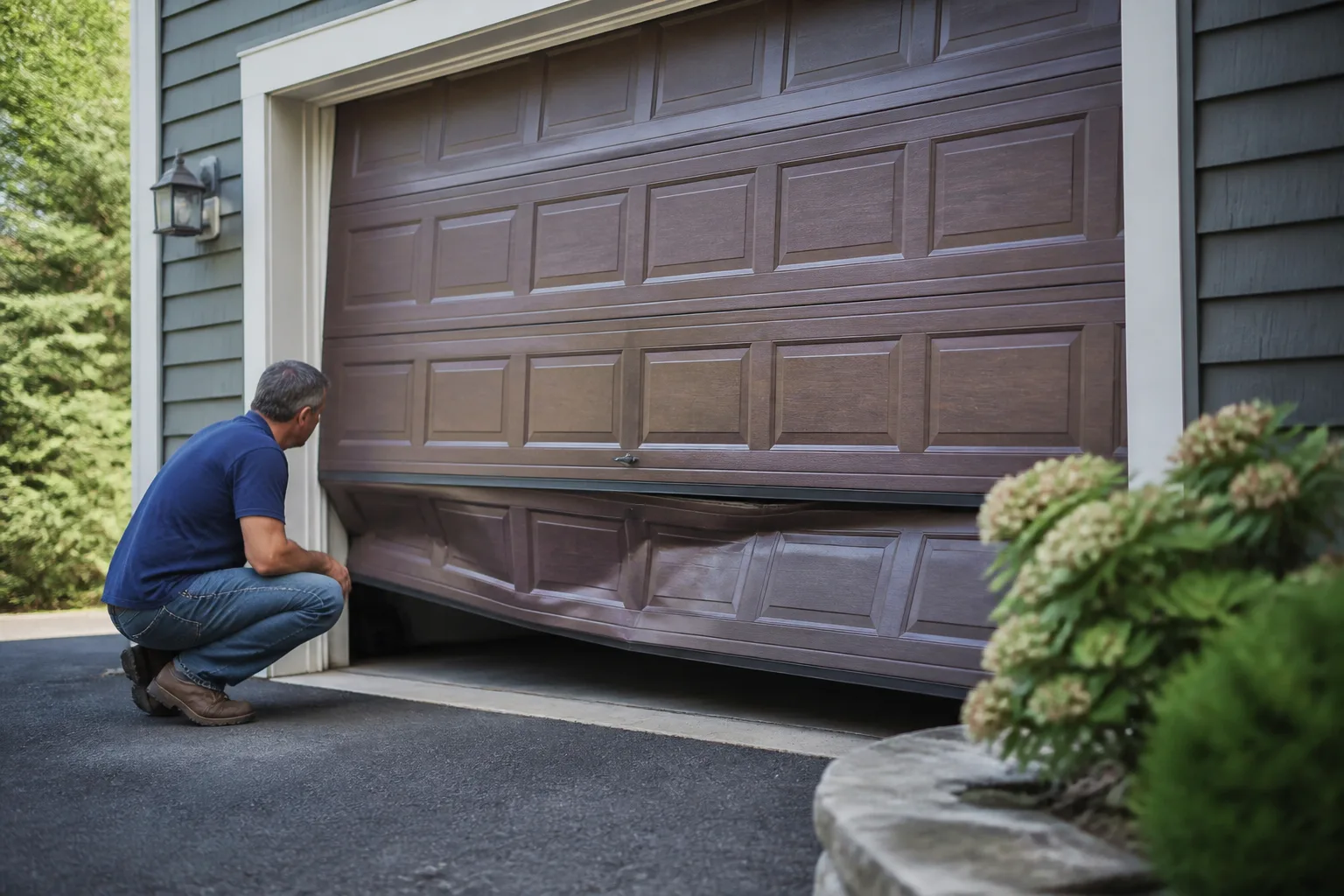
- A door that’s come off its track or hangs crooked
- A frayed or slack cable
A door that won’t close is more than an annoyance. It leaves your home open to weather and to people, and it usually means the safety sensor, the spring, or the opener logic has failed. That’s the exact situation emergency service is built for – not repackaged same-day scheduling, but a real response when a stuck door matters right now. In Wallingford, that can be anything from a coil blown in a cold snap to a door jammed halfway down in a storm.
How Wallingford’s Seasons Wear Down a Garage Door
Connecticut weather is hard on doors, and the failures follow a fairly predictable calendar. Cold winters and humid summers don’t just feel different – they stress different parts.
- Winter – Freezing temps make springs brittle and lubed parts stiff. Grinding and spring failures spike.
- Spring thaw – Moisture that worked its way into metal over winter starts rusting springs and cables.
- Summer humidity – Damp air speeds rust on springs and softens rollers, and wood-composite doors can swell in the frame.
- Fall – Falling temperatures and debris in the tracks cause sticking and alignment issues.
That’s why a door that’s been fine for months can stall the first cold week of the year. It’s not bad luck; it’s the season finding the weakest part. Wallingford homeowners who keep up with monthly checks tend to catch these on their own schedule rather than at the worst possible moment.
The Difference Damage Makes to Your Door – and Why Brand Matters
Impact damage and age show up differently on different doors. A Clopay or Amarr steel door tends to dent rather than crack; a Wayne Dalton can wear thin on the bottom panel before the rest goes. Knowing what you own helps you catch the right signs. We’re trained on those brands and several others, so when we take a look, we already know the door and how it should move.
The same goes for the opener side. A door that hesitates or grinds may be a spring or a roller problem, but a door that stutters on its way up could be a sensor, a logic board, or a remote issue on a Genie or a Genie-compatible unit. That’s why diagnosis comes before a fix. We work on what you already have – no pressure to replace what can be fixed.
If you decide replacement makes more sense than repair, we also install new doors from Clopay, Amarr, Wayne Dalton, and Raynor, and a full install is a scheduled job with a written price, not something we rush.
The Bottom Line
Learn your door’s normal sounds and movement, and you’ll catch most failures while they’re still small. Watch for squeaks, listen for grinding, and treat popping, hesitation, or a door off its track as a call-today sign. Wallingford’s cold and humidity push spring and roller failure on a schedule, so a quick monthly check goes a long way.
When it’s more than you want to handle, we’re set up for the whole chain: emergency response, component repair, spring work, and full replacement under one roof. If you’re in Wallingford and need help, Garage Door Repair Wallingford offers free estimates – call (888) 891-9574.
Related services in Wallingford: Garage Door Repair Wallingford, garage door repair, garage door opener repair, and garage door spring repair.
Frequently Asked Questions
The clearest signs are a door that hesitates, grinds, squeals, or pops; a door that won’t close or reverses on its own; or a visible frayed cable or spring gap. Any of the last three means call today. Call (888) 891-9574 for an exact quote – estimates are free.
Squeaky rollers and dry hinges you can usually lubricate yourself, and that’s fine. Grinding often points to worn rollers or a chain issue, and a popping or snapping sound means a spring or cable and should go to a professional – those parts are under high tension. Call (888) 891-9574 to have it checked.
Usually, yes. Hesitation at the start of each cycle is a spring-tension symptom more often than a weak opener, and the difference changes how long you can wait. Left alone, the extra load wears the opener too. Call (888) 891-9574 if it’s consistent.
A door that won’t close, has come off its track, hangs crooked, or is making a popping sound from a spring is an emergency. We answer 24/7, with fast dispatch from 7am to 7pm, Sunday through Friday. Call (888) 891-9574.
Written by the team at Garage Door Repair Wallingford.
Need Garage Door Help?
Call Garage Door Repair Wallingford - the local pro we connect you with is licensed and insured, here with fast help in Wallingford.
(888) 891-9574